
Understanding COI, Inbreeding & Genetic Diversity in Maine Coons
July 15, 2025
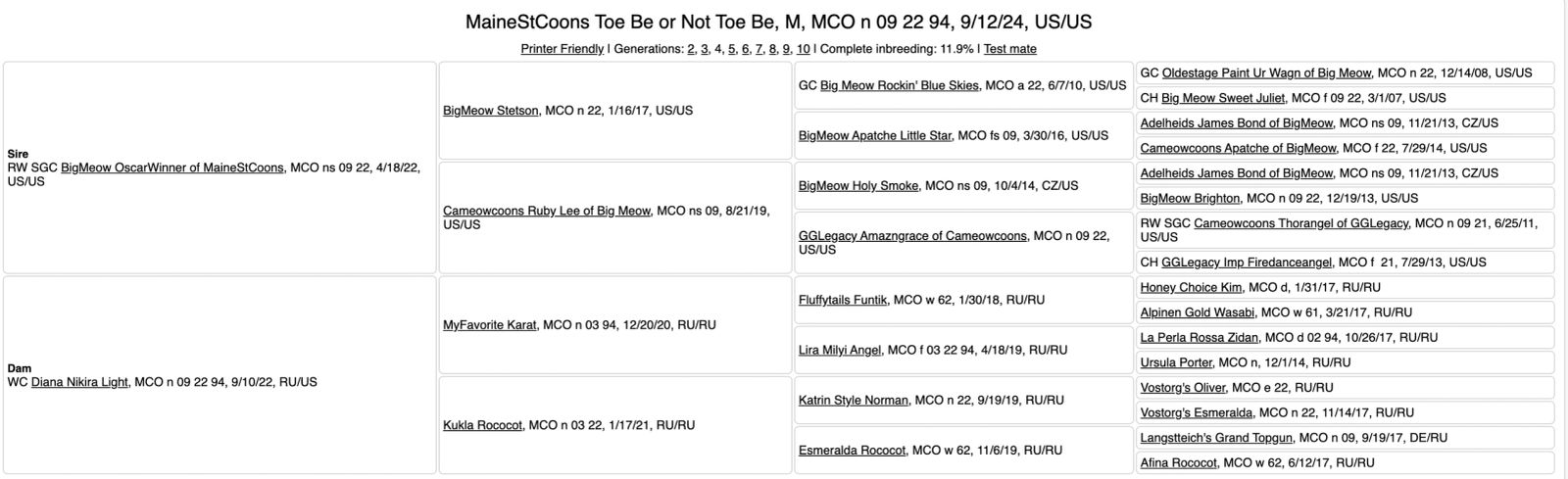
When you’re considering adding a Maine Coon kitten to your family, there’s more to think about than just their fluffy tails and gentle personalities. Behind their iconic looks is a heritage that needs careful stewardship from ethical breeders. One essential factor to understand is genetic diversity—the foundation of a healthy, thriving Maine Coon population.
This blog post dives into the Coefficient of Inbreeding (COI), the role of inbreeding percentages, and why genetic diversity is crucial to safeguarding the health of this beloved breed. We’ll also guide you on how to select an ethical preservation breeder, ensuring you bring home a robust, healthy kitten.
What Is COI and Why Does It Matter?
The Coefficient of Inbreeding (COI) measures the likelihood that two copies of the same gene are inherited from a shared ancestor. Essentially, it gauges how closely related two parents are. COI is expressed as a percentage; the higher the percentage, the more inbred an offspring is likely to be.
To put it simply:
- A lower COI means less inbreeding, more genetic diversity, and a lower chance of inherited health issues.
- A higher COI signals more inbreeding, less genetic variation, and a higher risk of inherited diseases or reduced vigor.
For cats, experts often recommend a COI below a certain threshold (typically under 15% in the Maine Coon) to help ensure long-term health. Because of decades of inbreeding, this isn’t always possible to achieve. However, preservation breeders study pedigrees and use genetic tools to calculate COI, allowing them to make thoughtful decisions about pairings to slowly reduce these percentages over time. With each new litter, an ethical breeder will strive to reduce the inbreeding percentage of the offspring.
Why Should You Pay Attention to COI?
High inbreeding levels can lead to health problems such as:
- Weakened Immune Systems – A lack of genetic diversity reduces the population’s ability to fight off diseases.
- Congenital Issues – Conditions such as hip dysplasia or heart disease may appear more frequently in inbred cats.
- Reduced Lifespan – Just like in humans, a smaller gene pool can decrease vitality and longevity.
By selecting breeders who prioritize low COI values, you’re indirectly protecting your kitten from these risks—and contributing to the health of the breed as a whole. You are making a responsible decision to support ethical breeding and reduce backyard breeding that hurts the breed you love.
The Role of Genetic Diversity in Maine Coons
The Maine Coon is a natural breed with origins in the U.S. However, modern breeding practices can sometimes limit genetic diversity. This happens when breeders repeatedly use “popular sires” or when unrelated lines become scarce.
Genetic diversity is important because it:
- Helps maintain a breed’s resilience to diseases.
- Reduces the likelihood of hereditary conditions.
- Supports a vibrant, thriving population over time.
Without diversity, Maine Coons as we know them could become more vulnerable to genetic bottlenecks, where traits—including harmful ones like HCM—are amplified.
How Ethical Breeders Preserve Genetic Health
Ethical preservation breeders go beyond producing kittens for sale. They view themselves as caretakers of the breed, committed to maintaining not only beauty but also health and temperament. Here’s how they manage inbreeding and genetic diversity:
1. Careful Pedigree Analysis
They study lineage records to track potential overlaps. This enables them to pair cats with complementary genetics rather than closely related ones. At Maine Street Coons, we rely heavily on an international breed registry available via PawPeds.
2. Genetic Testing
Many breeders now use tools like DNA testing to screen for inherited diseases and assess genetic diversity levels. Tests like these also help estimate COI with even greater precision.
3. Selective Breeding Practices
Instead of following trends or producing “designer kittens,” they focus on careful reproduction strategies to balance demand while improving genetic health.
4. Education and Advocacy
Preservation breeders educate buyers, encourage informed decisions, and dispel myths about breeding or pedigrees. When Maine Coon lovers trust and support them, breeders can continue their mission of protecting genetic diversity.
Questions to Ask a Breeder
To ensure you’re choosing an ethical breeder dedicated to genetic diversity, come prepared with the right questions, such as:
- What is the COI of the kittens?
- How do you manage pedigrees to reduce inbreeding?
- What genetic tests have been performed on the parents?
- Do you focus on preserving the breed’s genetic health, or are there specific traits you prioritize?
A good breeder will be open and transparent, willing to explain their approach to maintaining healthy cats.
Why This Matters to Kitten Buyers
By prioritizing health-conscious breeders, you’re not only investing in your future pet’s well-being but also contributing to the long-term vitality of Maine Coons as a breed. These choices help ensure that future generations of kittens can enjoy the same playful personalities, robust health, and majestic beauty.
Cats with a lower COI are less likely to experience chronic health issues, which can also mean fewer vet bills and a higher quality of life for both you and your feline friend.
The Bigger Picture
Supporting breeders who value genetic diversity helps combat irresponsible practices, like overuse of popular bloodlines or backyard breeding. Together with ethical breeders, kitten buyers like you play a vital role in protecting the Maine Coon population from genetic risks.
Final Thoughts
Bringing a Maine Coon kitten into your life is an exciting experience, and choosing the right breeder is essential to ensuring your new companion leads a healthy, happy life. When you prioritize low COI values and genetic diversity, you support a future where Maine Coons continue to thrive—not just in appearance but in overall health.
Take the time to do your research, ask the right questions, and find a breeder committed to the preservation of this wonderful breed. With your help, Maine Coons can remain the gentle giants we all love for generations to come.