
The Truth About Maine Coon Eye Colors – A Window to Authenticity
April 10, 2024
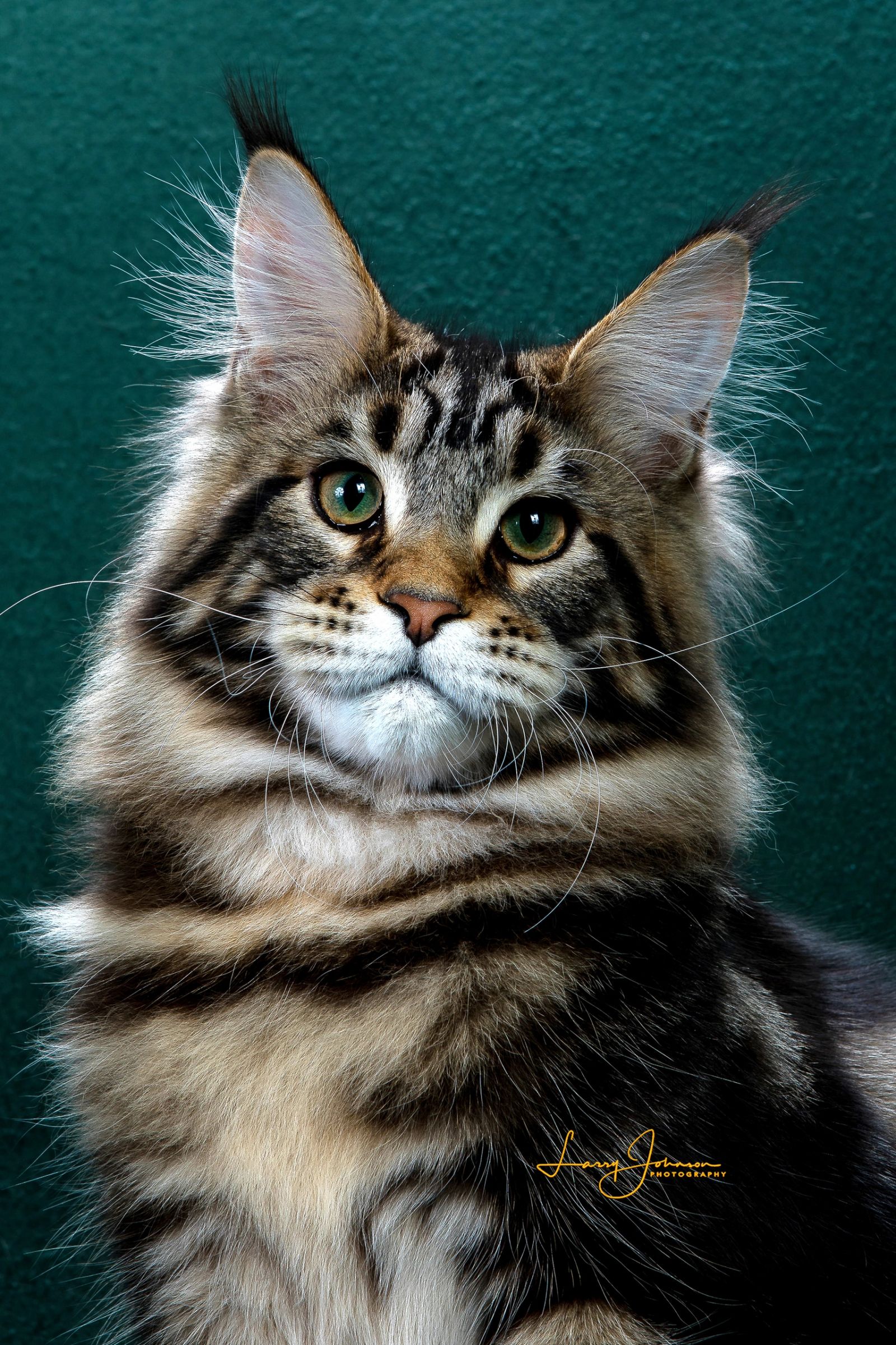
Maine Coon cats are majestic, mysterious, and larger than life. When it comes to these gentle giants, potential owners and feline enthusiasts are often in awe of their stunning looks. A question that arises more and more frequently within the Maine Coon community revolves around the eye colors of these magnificent creatures, with a common misconception being that blue eyes are now possible in any color purebred Maine Coon. However, that couldn’t be further from the truth. This post untangles the intricate thread of Maine Coon genetics and highlights the subtle details that distinguish a well-bred Maine Coon from the rest.
A Glimpse into the Maine Coon’s Past
Maine Coons boast a rich history that intertwines with the rugged landscape of New England. Believed to have evolved in the harsh winter conditions of the region, their thick, water-repellent fur, tufted ears, and large, bushy tails served as practical adaptations. But their hardy constitution and friendly, sociable nature truly captured their human companions’ hearts. Retelling this story is not mere sentimentalism; it’s integral to understanding why traditional features, including the colors of their eyes, remain a critical aspect of the Maine Coon’s legacy.
In the ethereal gaze of a Maine Coon, one expects to find the captivating depth of gold, green, or a mesmerizing combination of the two. These characteristic hues are more than just a point of fascination—they reflect the breed’s authenticity.
TICA Standards and Authentic Maine Coon Features
The International Cat Association (TICA) provides stringent guidelines that define the desired features and characteristics of a show-quality Maine Coon. The standard takes into account an array of physical attributes, from size and weight to coat length and even temperament. It stands as a beacon, guiding breeders in their pursuit of excellence and preservation.
One critical aspect of TICA’s written standard is eye color. The only allowable eye colors for a non-white Maine Coon are shades of green, gold, or a striking blend of the two known as green-gold. This emphasizes the importance of ancestral identity, steering breeders away from diluting the breed’s unique inherent traits.
The Myth of the Blue Eyes in Maine Coons
While all kittens are born with blue eyes, the Maine Coon kitten’s eyes will not stay that way for long. By the time a purebred Maine Coon kitten is eight weeks old, their eye color will begin to change. By the time a Maine Coon is four to six months old, the adult eye color will become clear, and it will not be blue.
In reality, the presence of blue eyes in adult Maine Coons that are not related to the white coat color is a telltale sign of crossbreeding. The rise in demand for Maine Coons has led some breeders to dilute the gene pool with other breeds, resulting in blue-eyed kittens that do not meet TICA standards. This misconception perpetuates the myth that blue eyes are a desirable feature in Maine Coons, when in fact, it goes against the breed’s authenticity.
Crossbreeding, at its core, is the process of mating two animals of different breeds to produce offspring that may inherit the physical and temperamental characteristics of both parents. This practice, when applied to Maine Coons, involves pairing these majestic felines with other breeds, potentially leading to variations not recognized by breed standards, such as blue eyes in adulthood.
In the quest to achieve unique or sought-after traits such as blue eyes, Maine Coons have been crossed with breeds known for this eye color. Siamese cats, for instance, are famous for their striking blue eyes due to a genetic trait that affects melanin production. Similarly, breeds like the Ragdoll and the Himalayan, both known for their mesmerizing blue eyes, may have been introduced into the Maine Coon gene pool. These crossbreedings, while producing aesthetically distinct kittens, diverge from the purebred Maine Coon lineage, stirring debates within breeding circles about the purity and preservation of the breed.
Breeder Ethics and the Maine Coon Community
As caretakers of this majestic and ancient breed, we at Maine Street Coons take our responsibility to preserve its unique characteristics and features very seriously. This includes upholding the breed standard, even when popular opinion differs.
The Maine Coon breeding landscape is as diverse as the roots of the breed itself. There are those, such as myself, who stand as guardians of tradition, breeding Maine Coons while remaining steadfast in their adherence to TICA or CFA standards and the cat’s New England heritage.
Conversely, some veer off course, chasing after market trends like “European Maine Coons” and “Blue Eyed” Maine Coons, compromising the breed’s integrity and, in some cases, its health. The divergence in breeding practices speaks volumes about breeders’ education, values, motivations, and ethics.
The Importance of Champion Lines
Champion bloodlines are not just a badge of honor; they are a testament to the Maine Coon’s genetic purity and adherence to breed standards. While one may argue that a beloved pet does not require a pedigree full of champion cats, the advantages of selecting a kitten with champion lineage are manifold. It ensures a certain level of health and temperament and guarantees authentic genetic makeup. Purchasing a Maine Coon from champion lines is an investment in quality. With this assurance, one enters into a partnership with a breeder dedicated to producing felines that carry the legacy of the Maine Coon breed in every loving gaze.
Preserving the Future of Maine Coons, Through Informed Adoption
For prospective Maine Coon owners, the divide in the breeder community highlights the need for due diligence. If you value enduring tradition and the preservation of the only long-haired cat breed native to the United States, seek out breeders who are knowledgeable about the breed and passionate about protecting its future.
The gaze of a Maine Coon is more than a window to its soul; it is a beacon of the breed’s resilience and charm. By educating ourselves and fellow enthusiasts and by promoting ethical breeding standards by choosing a breeder wisely, we lay the foundation for a future where these captivating creatures can be admired for all the right reasons.
Adoption is an act of love, responsibility, and commitment. The next time you’re drawn to the enigmatic eyes of a Maine Coon, remember that the vibrancy of green or gold is symbolic of a rich heritage and an unwavering commitment to excellence. It’s not just about a breed; it’s about preserving a legacy that deserves to be honored and upheld.
Warm Regards,
Kyra Hagan
Preservation Breeder