
The Crucial Connection: Early Socialization and Well-Being
April 2, 2024
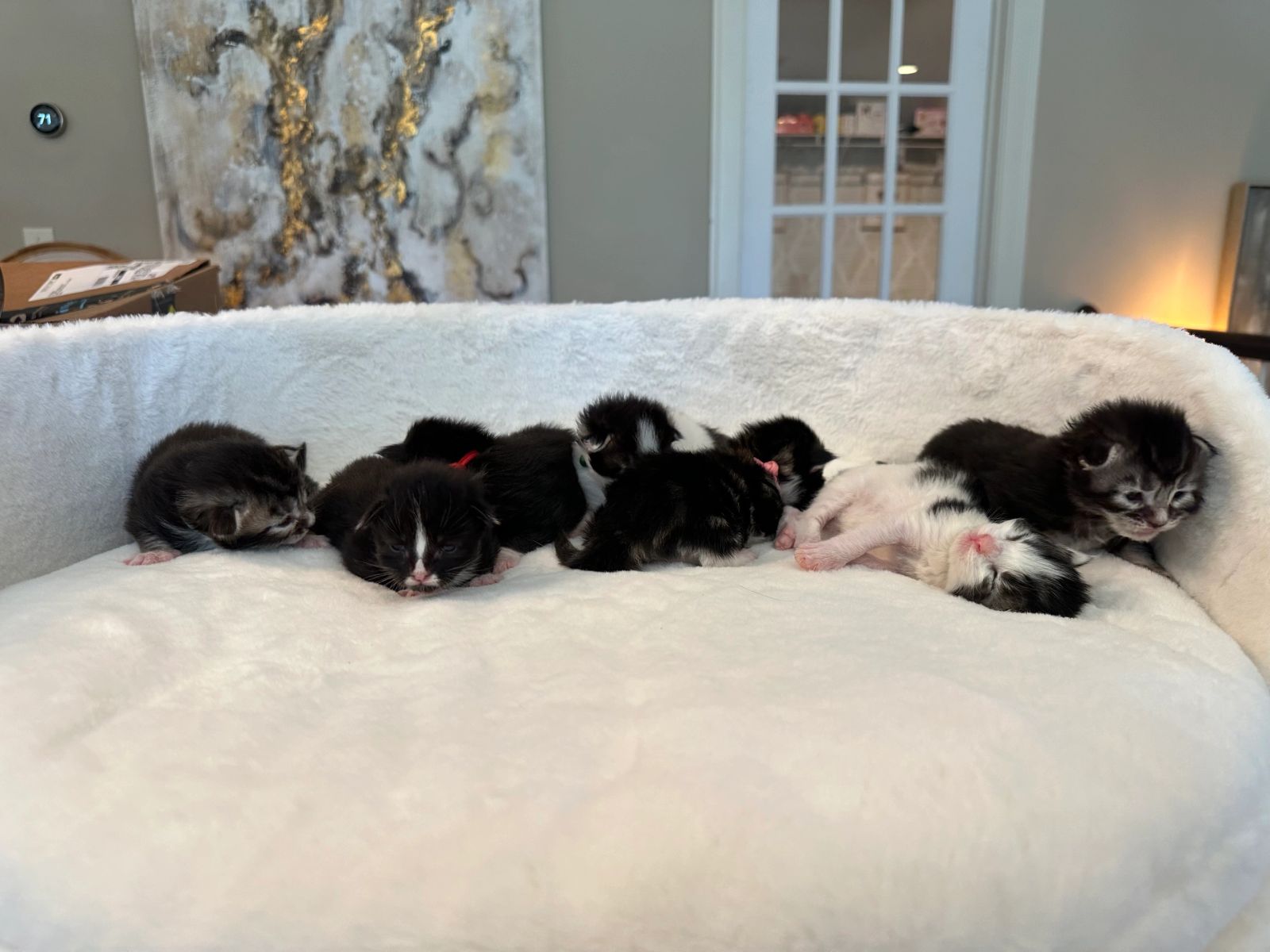
In the world of feline companions, Maine Coon kittens emerge as a beautiful breed with exceptional companionship potential. Both excellent paternal temperament and positive early socialization must combine to create a confident, affectionate cat with vast learning potential. Too often, inexperienced or under-educated breeders fail to appreciate the fleeting window of opportunity that exists, for it is within this early ‘golden’ period that these precious souls begin to take shape. In this opinion piece, I express my strong point of view that early (from birth) socialization is particularly crucial for the robust development of Maine Coon kittens’ temperaments.
Unveiling the Maine Coon Identity
Maine Coons are renowned for their gentle nature, intelligence, and large physical stature. Often referred to as the ‘gentle giants’ of the domestic cat world, they exude an air of quiet confidence and approach life with an amiable demeanor. This is a breed that, when given a robust foundation of socialization, can thrive as family companions that truly understand and reciprocate the human social contract.
The Crucial Cadence of Early Socialization
Temperament can be understood as an animal’s individuality or character and is a trait influenced by genetics, the environment, and social interactions. Environmental effects begin during in-utero development and continue throughout an animal’s early life.
The concept of socialization for Maine Coons is not a mere casual interaction; it’s a carefully choreographed ballet that shapes the trajectory of their adult personality. Socialization is the process through which kittens develop relationships with other living beings and learn appropriate interactions, environmental cues, and important life skills.
During their first seven weeks of life, kittens are a proverbial blank slate, with their minds receptive to imprinting the experiences that will chart their psychological course. For Maine Coons, a breed known to mature slowly, these weeks are imperative. It’s a critical period where positive interactions can overrule fear, and a stable temperament can be set.
The Pervasive Impact of Early Socialization on Maine Coons
The effects of positive early socialization echo through the Maine Coon cat’s life, impacting its health and well-being. Well-socialized Maine Coon kittens are more likely to adapt readily to new environments, experience reduced stress, and display a generally more agreeable temperament. They grow to become more engaging and less susceptible to behavioral issues, making them ideal family pets.
A common misconception is that Maine Coons, with their rugged individualism, require less socialization than their more ‘malleable’ feline counterparts. However, this couldn’t be further from the truth; the very traits that make Maine Coons unique necessitate a strong foundational social blueprint to ensure that confidence, not skittishness, becomes their hallmark.
More so than other domestic cat breeds, Maine Coons exhibit a distinct social motivation that drives them to seek and maintain strong bonds with their human families. This inherent trait underscores the necessity for ongoing social interaction beyond their formative weeks. Unlike some breeds that may cherish solitude, Maine Coons thrive in family environments where they can participate in daily activities and feel like a member of the pack. Their sociable nature is not limited to humans; Maine Coons often get along well with other pets, showcasing a level of adaptability and companionship unmatched by more aloof breeds. This predisposition towards social connectivity enhances their appeal as family pets and highlights the importance of integrating them into family life as fully-fledged members.
In my experience as both a Maine Coon breeder and enthusiast, I’ve seen the stark difference between well-socialized Maine Coons and those who missed the early boat. The former exhibit a self-assuredness that is a delight to witness, while the latter, though often well-intentioned, are marred by apprehension that can be challenging to overcome.
It is possible to identify Maine Coon cats and kittens that a breeder does not properly socialize by observing certain behaviors and characteristics. These may include a pronounced hesitation or fearfulness around humans and other pets, a tendency to hide or avoid interaction, and a marked lack of curiosity or playfulness that is typically seen in well-socialized Maine Coons. Additionally, unsocialized Maine Coons might exhibit aggressive behaviors as a defensive mechanism, such as hissing, swatting, or biting when approached or handled. Conversely, a well-socialized Maine Coon kitten will display confidence, approachability, and a keen interest in engaging with their environment and those within it.
Rising to the Challenge of Socialization
Socializing Maine Coon kittens effectively is not without its hurdles. One of the most prevalent challenges is time—socialization demands a significant investment of time and attention, resources that are often in short supply, especially for breeders nurturing multiple litters. Additionally, there is the issue of expertise; not all individuals possess the requisite skills to execute successful socialization.
To address these, breeders and those responsible for the welfare of kittens must encourage a hands-on approach to socialization. This means integrating kittens into the heart of the household and providing a diverse array of experiences, such as varied human interactions, the introduction of common household noises, and supervised play with mother and littermates.
Maine Coon kittens must be exposed to all the things they are expected to encounter in their lifetime, including bathing, grooming, nail clipping, car rides, and visits to the veterinarian’s office. This exposure helps to normalize what could otherwise be stressful or frightening experiences. For instance, regular handling of paws can make nail clipping a routine, rather than a battle. Introducing kittens to bathing and grooming from a young age instills a sense of calm around these activities. Similarly, car rides that lead to positive destinations—not just the vet—can help reduce anxiety associated with travel. Importantly, positive reinforcement through treats and affection during these activities strengthens the bond between Maine Coon kittens and their caregivers, building a foundation of trust and ease with handling.
The Ethical Imperative for Breeders
Breeders, as the architects of a Maine Coon’s early socialization, bear a weighty responsibility. It is incumbent upon them to prioritize the early well-being of their litters, investing not just in their physical health, but their emotional fortitude as well. Prospective Maine Coon owners should prioritize research, seeking out breeders with a track record of diligent and effective socialization practices.
Maine Coon kittens that become familiar with the scent of human hands from birth and who associate human presence and touch with positive experiences, like nursing, will grow up to become more confident Maine Coon cats. This early tactile imprinting plays a crucial role in shaping their reactions to humans and their environment. When kittens learn that human interaction leads to comfort and care, they are more likely to respond to humans with trust and affection. Incorporating gentle handling practices from a very young age not only aids in their social development but also in their adaptability to various situations, making them well-rounded and sociable pets. This foundational trust is instrumental in developing Maine Coons that are not only physically robust but also emotionally secure and outgoing.
Socialization: A Maine Coon’s Inheritance
In conclusion, the impact of early socialization on Maine Coon kittens cannot be overstated. When bequeathed with care, it is an enriching inheritance that ensures that this majestic breed blooms into the dignified, loving companions they are revered as. I implore cat lovers to carefully select a breeder who recognizes their pivotal role in this process and commits to providing the support and experiences to launch these magnificent kittens into a life of rewarding social kinship.
The task may be daunting, yet the reward—seeing a once timid ball of fur grow into a self-assured, affable feline—is immeasurable. It is, after all, not just about the cat; it is about the lifelong connection we forge with an animal that is, in every sense of the word, family.